The AI SDR Operating System: Beyond Automation
Ramya S.
May 25, 2026
B2B Sales
Sales
Sales Team
Sales Acceleration
What Is an AI SDR Operating System?
An AI SDR operating system is an intelligent sales infrastructure layer that manages conversations, lead qualification, follow-ups, buying signals, and revenue workflows across channels in real time.
Unlike traditional sales automation tools, AI SDR operating systems continuously learn from buyer interactions and optimize sales execution automatically.
In simple terms:
Sales automation executes tasks.
AI SDR operating systems coordinate revenue workflows intelligently.
This shift is changing how modern GTM teams operate.
Why Traditional Sales Automation Is No Longer Enough
Most sales automation platforms were built around static workflows.
Typical logic looks like this:
If a lead fills out a form → send email
If a prospect opens an email → trigger follow-up
If a meeting is booked → update CRM
But modern B2B buying journeys are no longer linear.
Buyers now:
switch between channels constantly
research independently
engage anonymously
involve multiple stakeholders
compare vendors in real time
Traditional automation cannot adapt to this complexity.
AI SDR operating systems can.
They analyze:
buyer behavior
conversation context
engagement depth
intent signals
timing patterns
and dynamically decide what should happen next.
How AI SDR Operating Systems Work
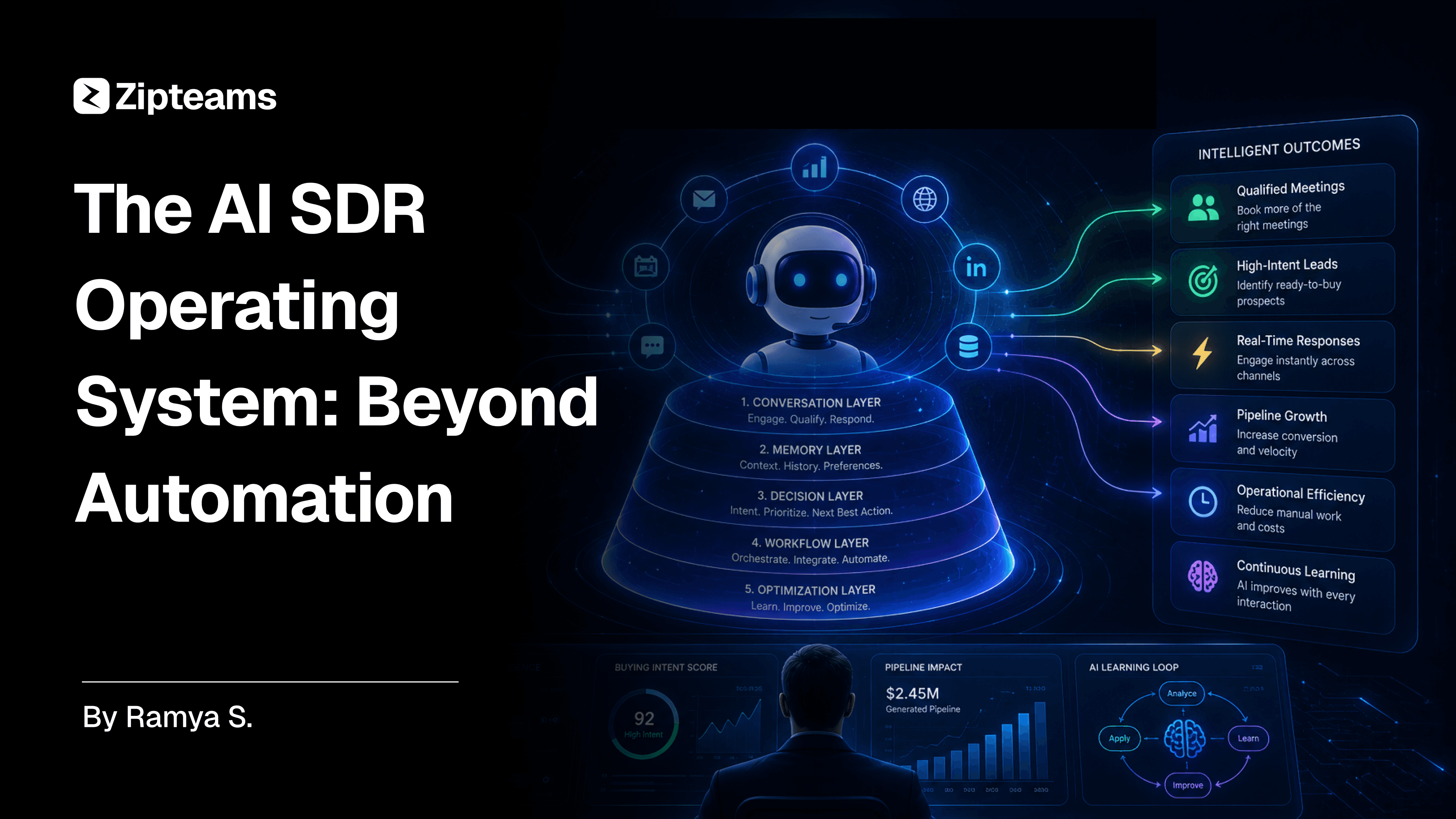
Modern AI SDR operating systems combine multiple layers of intelligence into a unified revenue workflow engine.
1. Conversation Intelligence Layer
This layer handles real-time interactions across:
email
chat
voice
LinkedIn
website conversations
The AI SDR can:
qualify leads
answer objections
personalize outreach
book meetings
respond instantly
Unlike rule-based chatbots, modern AI SDRs maintain conversational context across interactions.
2. Memory and Context Layer
One of the biggest limitations of traditional sales tools is lack of memory.
AI SDR operating systems store:
previous conversations
objections
product interests
buying timelines
stakeholder involvement
engagement history
This creates continuity across the buyer journey.
For buyers, conversations feel personalized instead of repetitive.
3. Real-Time Decision Layer
The decision layer acts as the intelligence engine.
It evaluates:
urgency signals
buying intent
sentiment changes
competitor mentions
engagement frequency
qualification probability
The AI SDR then decides:
when to follow up
which channel to prioritize
whether to escalate to a human rep
how aggressively to qualify
This transforms outbound sales from static sequencing into adaptive orchestration.
4. Revenue Workflow Layer
AI SDR operating systems connect:
CRM systems
email platforms
enrichment tools
call intelligence
calendars
sales engagement systems
product usage data
Instead of isolated tools, the AI SDR becomes the operational coordination layer across the GTM stack.
5. Continuous Optimization Layer
Every interaction becomes learning data.
The AI continuously improves:
messaging
timing
qualification logic
objection handling
outreach sequencing
This creates compounding optimization over time.
Traditional workflows remain static.
AI SDR operating systems evolve continuously.
AI SDR Operating Systems vs Traditional Sales Automation
Traditional Automation | AI SDR Operating System |
Static workflows | Adaptive workflows |
Rule-based logic | Context-aware intelligence |
Manual optimization | Continuous self-optimization |
Channel silos | Multi-channel orchestration |
Delayed response | Real-time engagement |
Reactive workflows | Autonomous decision-making |
Why AI SDR Operating Systems Matter
Modern sales teams face four major operational challenges:
slower lead response
fragmented buyer data
inconsistent follow-ups
inefficient qualification
AI SDR operating systems solve these problems simultaneously.
Benefits include:
faster qualification
improved response speed
better personalization
lower lead leakage
scalable outbound workflows
higher conversion efficiency
The biggest advantage is speed.
Companies that respond to buyer intent fastest usually win pipeline.
AI SDRs Are Becoming Revenue Infrastructure
The next generation of sales infrastructure will not revolve around CRMs alone.
It will revolve around conversations and intent.
AI SDR operating systems are becoming:
conversation engines
qualification systems
buying signal analyzers
revenue orchestration layers
This represents a major shift in GTM architecture.
In the future:
AI SDRs will manage outreach autonomously
workflows will self-optimize continuously
qualification will happen in real time
sales teams will supervise AI systems instead of manually executing repetitive tasks
This is the evolution from sales automation to autonomous revenue infrastructure.
Key Takeaways
AI SDR operating systems go beyond basic sales automation
They coordinate conversations, workflows, and qualification dynamically
Modern AI SDRs analyze buyer intent in real time
Continuous learning enables ongoing optimization
AI SDR operating systems are becoming the foundation of modern GTM execution
Frequently Asked Questions
What is an AI SDR operating system?
An AI SDR operating system is an intelligent sales infrastructure layer that manages outreach, qualification, conversations, workflows, and buying signals across channels in real time.
How is an AI SDR different from a chatbot?
Traditional chatbots follow scripts and react to prompts. AI SDRs maintain context, analyze intent, orchestrate workflows, and optimize conversations dynamically.
Can AI SDRs replace sales automation tools?
AI SDRs are increasingly replacing fragmented automation workflows because they combine orchestration, intelligence, and optimization into a single system.
Why are AI SDR operating systems important?
They improve lead response speed, qualification accuracy, personalization, and revenue efficiency while reducing manual operational work.
What is the future of AI SDRs?
AI SDRs are evolving into autonomous revenue systems capable of managing conversations, workflows, and pipeline generation continuously across channels.