How AI SDRs Detect Buying Signals in Real Time
Thid article breaks down how AI SDRs detects buying signals in real time.
Ramya S.
Jun 10, 2026
B2B Sales
Sales
CRM
Sales Team
What Are Buying Signals?
Buying signals are behavioral or conversational indicators that suggest a prospect is moving closer to a purchasing decision.
Examples include:
pricing questions
implementation discussions
urgency language
competitor comparisons
repeated engagement
stakeholder involvement
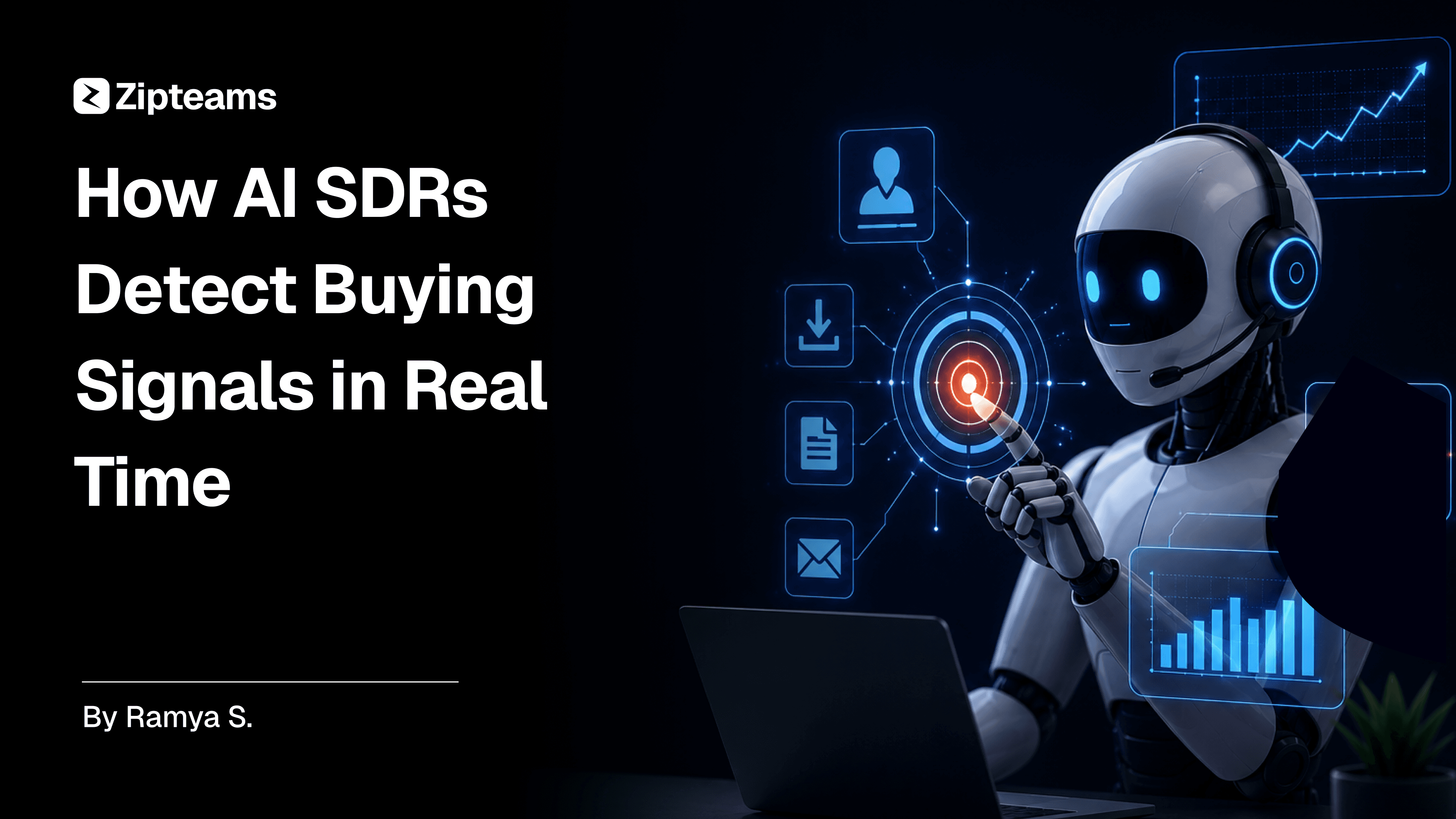
Modern AI SDRs detect these signals automatically across channels and conversations in real time.
This allows sales teams to prioritize high-intent buyers faster and improve conversion efficiency.
Why Human SDRs Miss Buying Signals
Human SDRs manage:
hundreds of leads
multiple communication channels
manual CRM updates
follow-up sequences
meeting coordination
Important buyer signals are often missed because the data is fragmented across systems.
For example:
a prospect revisits pricing pages repeatedly
watches a demo multiple times
engages across email and LinkedIn
asks implementation-related questions
Individually, these actions may seem minor.
Together, they indicate strong purchase intent.
AI SDRs connect these signals instantly.
How AI SDRs Detect Buyer Intent in Real Time
AI SDRs analyze data continuously from:
emails
calls
website activity
CRM systems
LinkedIn engagement
meeting transcripts
product usage signals
The AI evaluates:
engagement depth
urgency indicators
conversation sentiment
stakeholder activity
qualification probability
This creates dynamic real-time intent analysis.
Instead of relying on static lead scoring, AI SDRs continuously update buyer readiness based on behavior.
The 7 Most Important Buying Signals AI SDRs Detect
1. Pricing and ROI Discussions
Questions about:
pricing
contracts
ROI
procurement
packaging
often indicate serious evaluation intent.
AI SDRs detect these signals instantly inside conversations.
2. Urgency Indicators
Phrases like:
“ASAP”
“this quarter”
“before renewal”
“urgent”
“timeline”
signal accelerated buying cycles.
AI systems automatically prioritize these prospects.
3. Competitor Mentions
When buyers compare vendors, intent typically increases.
AI SDRs identify:
competitor names
migration concerns
feature comparisons
switching discussions
This helps sales teams respond strategically.
4. Stakeholder Expansion
Buying probability increases when additional stakeholders join conversations.
AI SDRs track:
procurement involvement
executive participation
technical evaluators
finance stakeholders
This helps identify deal progression automatically.
5. Positive Sentiment Shifts
AI systems analyze tone and engagement patterns.
Signals include:
stronger responsiveness
reduced objections
deeper technical questions
increased enthusiasm
These often indicate growing purchase intent.
6. Repeat Engagement
Prospects who repeatedly:
open emails
revisit pricing pages
engage with demos
return to content
usually demonstrate higher buying intent.
AI SDRs combine these engagement patterns into unified intent scoring.
7. Technical Evaluation Signals
Discussions involving:
APIs
integrations
security
implementation
compliance
often indicate advanced evaluation stages.
AI SDRs escalate these opportunities automatically.
AI SDR Intent Detection vs Traditional Lead Scoring
Traditional Lead Scoring | AI SDR Intent Detection |
Static rules | Continuous analysis |
Demographic-heavy | Behavioral analysis |
Delayed updates | Real-time signals |
Limited context | Multi-channel context |
Manual prioritization | Autonomous prioritization |
This is why AI SDR systems improve qualification speed significantly.
Why Real-Time Buying Signals Matter
Modern sales depends on speed.
The faster a company responds to buyer intent:
the higher the conversion rate
the lower the lead leakage
the shorter the sales cycle
AI SDRs reduce the gap between:
buyer interest → sales action.
That gap is where many companies lose revenue today.
The Future of Signal-Based Selling
Sales is shifting from static outreach toward signal-based engagement.
Future AI SDR systems will:
prioritize buyers dynamically
optimize outreach timing automatically
detect qualification continuously
orchestrate conversations across channels
The companies that act on buying signals fastest will gain a major competitive advantage.
Key Takeaways
AI SDRs detect buying signals in real time across channels
Behavioral intent analysis is replacing static lead scoring
Real-time engagement improves qualification speed and conversion rates
AI SDRs combine conversational and behavioral signals continuously
Signal-based selling is becoming the future of revenue generation
Frequently Asked Questions
What are buying signals in sales?
Buying signals are behavioral or conversational indicators that suggest a prospect may be ready to purchase.
How do AI SDRs detect buyer intent?
AI SDRs analyze conversations, engagement behavior, sentiment, urgency signals, and stakeholder activity across channels in real time.
Why are AI SDRs better than traditional lead scoring?
Traditional lead scoring is static and demographic-heavy, while AI SDRs continuously analyze behavioral intent dynamically.
What channels do AI SDRs monitor?
AI SDRs analyze signals across email, calls, LinkedIn, website activity, CRM systems, meeting transcripts, and product usage.
Why does real-time intent detection matter?
Faster response to buyer intent improves qualification speed, conversion rates, and pipeline efficiency.