What Is Call & Meeting Intelligence in Salesforce? A Beginner’s Guide for Sales Teams
A beginner-friendly guide explaining how call and meeting intelligence works in Salesforce and how sales teams can use it to gain visibility, improve coaching, and close more deals.
Ramya S.
Jan 22, 2026
Generative AI
CRM
Conversation Intelligence
Generative AI
Introduction: Why Sales Teams Struggle to Learn from Calls
Every sales team has hundreds of calls and meetings every month.
Demos, discovery calls, follow-ups, internal reviews—conversations are where deals are truly won or lost.
Yet, most of this data disappears the moment a call ends.
Sales reps move on. Notes are incomplete. Managers rely on gut feel. And Salesforce—the system of record—ends up missing the most critical insights from buyer conversations.
This is where Call & Meeting Intelligence in Salesforce comes in.
In this beginner-friendly guide, we’ll cover:
What call & meeting intelligence actually means
How it works inside Salesforce
Why sales teams need it today
And how to use it to improve performance, coaching, and deal outcomes
1. What Is Call & Meeting Intelligence?
Call & meeting intelligence refers to AI-powered technology that records, transcribes, analyzes, and extracts insights from sales conversations—such as phone calls, video meetings, and demos.
When integrated with Salesforce, this intelligence automatically connects conversation data to:
Leads
Contacts
Opportunities
Accounts
Instead of relying on manual notes, sales teams get structured, searchable, and actionable insights directly inside their CRM.
In simple terms:
It turns sales conversations into data Salesforce can understand and act on.
2. Why Salesforce Alone Isn’t Enough
Salesforce is excellent at tracking:
Pipeline stages
Deal values
Activity logs
Forecasts
But it doesn’t natively capture what was actually said during a call.
That creates several problems:
Reps forget to log key objections or buying signals
Managers can’t review real conversations at scale
Coaching is based on outcomes, not behavior
Critical deal risks stay hidden until it’s too late
Call & meeting intelligence fills this gap by bringing conversation context into Salesforce.
3. How Call & Meeting Intelligence Works in Salesforce
Here’s a simplified breakdown of how these tools work:
a. Automatically Records Calls & Meetings
The tool joins sales calls (Zoom, Google Meet, MS Teams, phone) with consent and records the conversation—no manual effort required from reps.
b. Transcribes Conversations in Real Time
AI converts speech into accurate text transcripts, making every conversation searchable.
c. Analyzes Key Moments
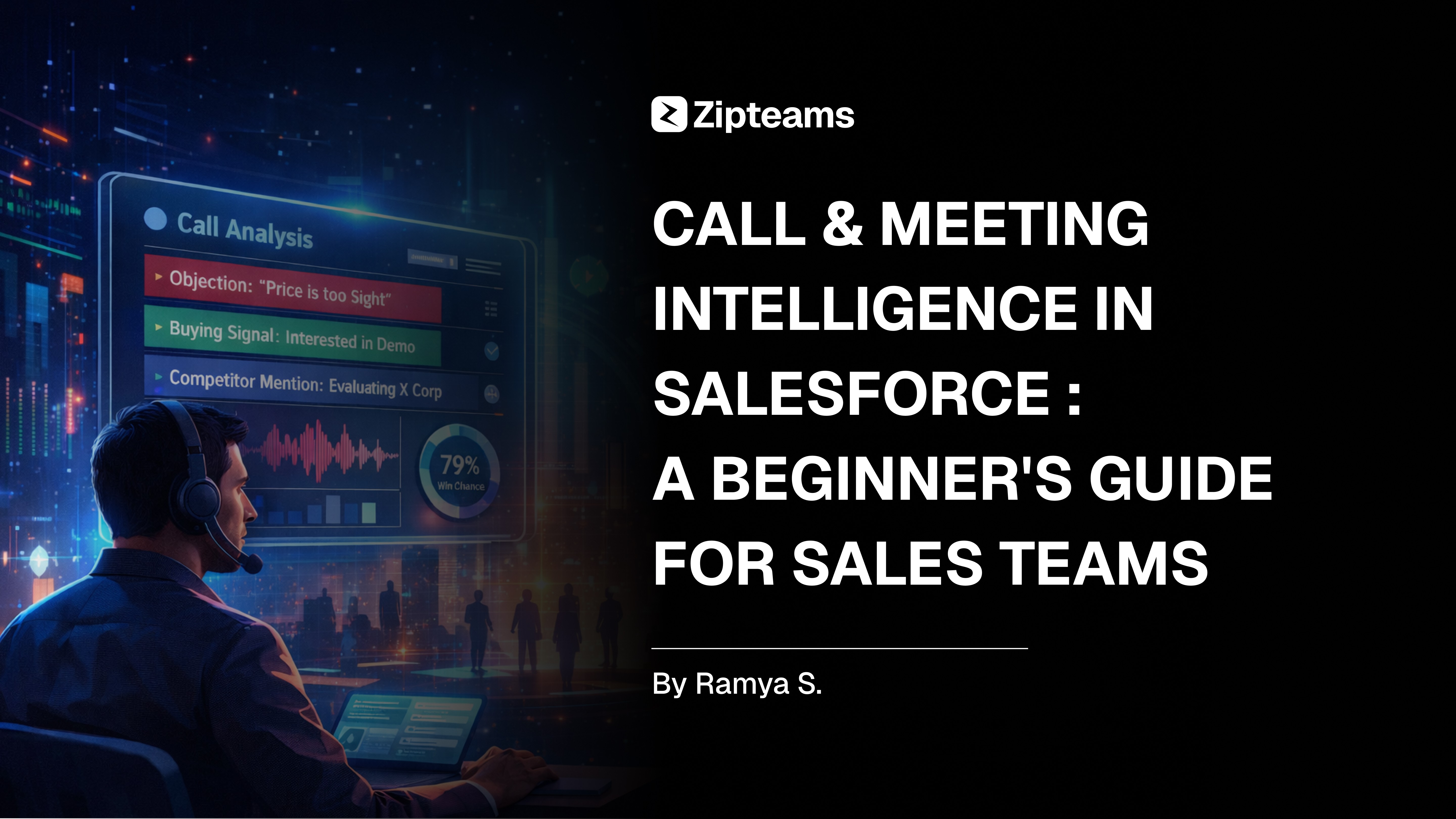
AI detects:
Buyer questions
Objections
Pricing mentions
Competitor names
Next steps and commitments
d. Syncs Insights to Salesforce
All relevant insights are automatically pushed into Salesforce fields, notes, or timelines—mapped to the right lead or opportunity.
4. What Kind of Insights Do Sales Teams Get?
Call & meeting intelligence tools surface structured insights from every sales conversation, including:
Objections
AI identifies moments where prospects express concerns such as pricing, timing, or fit. This helps sales teams flag deal risks early instead of discovering them at the last stage.
Buying Signals
When prospects ask questions about implementation timelines, integrations, contract terms, or next steps, AI marks these as buying intent signals—indicating the deal is moving forward.
Competitor Mentions
If a prospect references competitors during a call, the system captures and logs it in Salesforce. This allows reps and managers to tailor positioning and messaging for the next interaction.
Talk-to-Listen Ratio
Call intelligence analyzes how much the rep speaks versus the prospect. A high rep talk-time can signal poor discovery, while balanced conversations often correlate with better deal outcomes.
Next Steps & Commitments
AI automatically detects agreed-upon actions like sending a proposal, scheduling a follow-up, or looping in stakeholders—reducing the risk of missed follow-ups.
Instead of scattered call notes, Salesforce now reflects clear, structured insights from real conversations, helping teams act faster and more confidently.
5. Key Benefits for Sales Teams
Better Rep Coaching
Managers can review real calls, not just outcomes, and coach based on specific moments.
Improved Deal Visibility
Sales leaders see which deals are healthy—and which ones are at risk—based on conversation data.
Higher Win Rates
Teams can identify what top performers say differently and replicate it across the org.
Accurate Forecasting
When Salesforce includes buyer intent and objections, forecasts become more reliable.
6. Use Case: Call & Meeting Intelligence with Zipteams + Salesforce
Let’s take Zipteams as an example.
Zipteams’ AI Sales Agent:
Records sales calls and meetings
Analyzes conversations for intent, objections, and next steps
Auto-syncs insights into Salesforce in real time
Sales reps don’t need to write long notes.
Managers don’t need to guess deal health.
Each opportunity in Salesforce shows:
Key moments from the last call
Buying intent signals
Missed follow-ups or risks
This creates a single source of truth—powered by conversations, not assumptions.
7. How to Get Started with Call & Meeting Intelligence in Salesforce
Step 1: Identify Your Sales Conversations
List where conversations happen—calls, demos, video meetings, inbound/outbound.
Step 2: Choose a Salesforce-Compatible Tool
Look for tools that offer:
Native Salesforce integration
Conversation intelligence
Automated syncing (no manual uploads)
(Examples: Zipteams, Gong, Chorus)
Step 3: Define What Matters to You
Decide which signals matter most—pricing, competitors, timelines, objections.
Step 4: Train Reps & Managers
Show reps how insights reduce admin work.
Train managers to coach using real call data.
Step 5: Review & Optimize
Regularly review patterns from closed-won and closed-lost deals to refine your approach.
8. Common Mistakes to Avoid
Treating recordings as surveillance instead of coaching tools
Not syncing insights properly to Salesforce objects
Overloading reps with raw transcripts instead of summaries
Ignoring compliance and consent requirements
Call intelligence works best when it’s assistive, not intrusive.
9. Final Thoughts: Conversations Are Your Best Sales Data
Salesforce tells you what happened in your pipeline.
Call & meeting intelligence tells you why it happened.
In modern sales teams, the biggest competitive advantage isn’t more activity—it’s better understanding of buyer conversations.
If Salesforce is your system of record, call & meeting intelligence is the missing layer that makes it truly intelligent.